Richard Heart Beat the SEC on a Technicality, Then His Own Tax Office Caught Up With Him in…
On 14 October 2026, Turkish police arrested the founder of Hex and PulseChain on an Interpol red notice issued for Finland, which suspects him of gross tax evasion. He had walked away from a $1 billion SEC case 18 months earlier, not because a court cleared him, but because the judge found no US jurisdiction. I went through the whole arc, the sacrifice mechanism, the allegations, the dismissal that was not an acquittal, and a blockchain whose biggest customer was its own founder.
Last verified Also on Medium
On this page
- The man was the product
- The word that was doing a lot of work
- Where the SEC said the money went
- The dismissal that was not an acquittal
- Finland was building a different case
- What the raid turned up
- The chain whose only real customer was its founder
- How the market took it
- What happens next, and what a red notice is not
- The pattern this fits
- What it leaves behind
On the morning of 14 October 2026, Turkish police and intelligence officers raided a property in the Beşiktaş district of Istanbul and arrested Richard Heart, the founder of the crypto projects Hex, PulseChain, and PulseX. His legal name is Richard James Schueler. His wife was detained alongside him, and 3 alleged bodyguards were picked up later. The arrest ran on an Interpol red notice issued in December 2024 at Finland’s request, and it closed out roughly 2 years in which Heart stayed out of reach of Finnish investigators while continuing to live stream to his followers.
This is one of the strangest arcs in crypto, a founder who turned himself into the product, beat the US securities regulator on a jurisdictional technicality, ran a public victory lap, and then got caught by the far less glamorous machinery of a tax authority. I want to walk through how it actually worked, keeping careful track of what has been alleged versus what has been proven, because almost none of it has been proven yet.
The man was the product
Plenty of crypto founders enjoy attention. With Heart, the attention was the business model. He ran hours of live streams, posted endless clips of luxury watches and supercars, and promoted his projects with a skill few in the space could match. Hex was not sold on its code, and PulseChain was not pitched on any breakthrough in blockchain architecture. The pitch was Heart himself, the idea that he knew something the rest of the market did not, and that if you held his tokens long enough you would end up living like him.
For a while it worked. Hex hit its peak in November 2021, riding the mania of that cycle. A product built entirely on belief in a person is only as strong as that belief, and when it fades there is nothing underneath to stop the fall. Hex is now down more than 99% from its peak, and it was already down that far before any of the recent legal trouble arrived.
The word that was doing a lot of work
To understand how so much money flowed in, you have to understand the word Heart used for taking it. That word was sacrifice. Participants did not buy tokens in a normal sale. They sent their crypto to what were called sacrifice addresses, and in return received tokens, including PLS, the native coin of PulseChain, and PLSX, the token of its exchange, PulseX.
The choice of word was not decoration. According to the SEC, it was the point. The agency alleged the wording was an attempt to keep the offerings outside securities law, on the theory that if you are not selling anything, you cannot be selling securities. The SEC alleged the offerings raised more than $1 billion in crypto assets. The Hex offering alone, which ran from at least December 2019 through November 2020, allegedly took in more than 2.3 million Ether, helped along by what the complaint called recycling transactions that let Heart gain control of more Hex tokens. He also allegedly marketed a Hex staking feature promising returns as high as 38%.
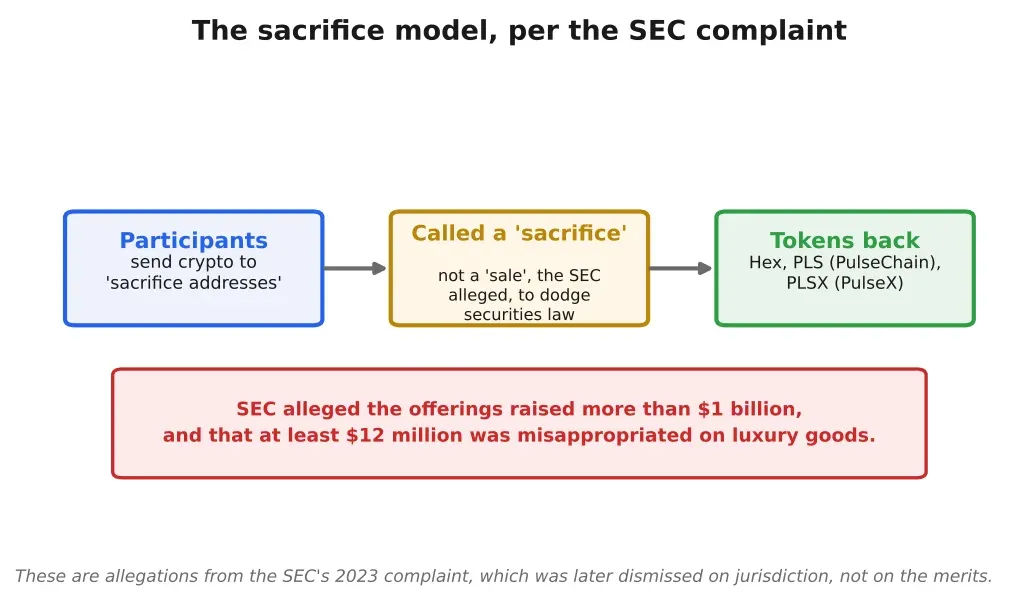
Figure 1. How the sacrifice model worked, per the SEC complaint. Participants sent crypto to sacrifice addresses and received Hex, PLS, and PLSX tokens, a structure the SEC alleged was designed to dodge securities law by avoiding the word sale. Source: Author diagram based on the SEC complaint
Where the SEC said the money went
In July 2023 the SEC sued Heart, along with Hex, PulseChain, and PulseX as codefendants, in federal court in the Eastern District of New York. The core claim was that the sacrifices were unregistered securities offerings, a sale of investments to the public dressed up in ritual language without the registration and disclosure the law requires. On top of that, the agency alleged fraud and misappropriation.
The misappropriation is where the luxury came in. The SEC alleged that Heart and PulseChain misappropriated at least $12 million of offering proceeds, spending it on sports cars, watches, and a 555-carat black diamond known as The Enigma, which the complaint described as reportedly the largest black diamond in the world. The people doing the sacrificing received tokens. The diamond, per the SEC, went one direction only. None of these allegations have been proven in court, and Heart has denied wrongdoing throughout.
The dismissal that was not an acquittal
For a while this looked like the most serious threat Heart had faced. Then, on 28 February 2025, Judge Carol Bagley Amon dismissed the case. The reason matters, and it is widely misunderstood. She did not find that the sacrifices were legal or that the projects were not securities. She found that the SEC had not established US jurisdiction. The offerings were globally accessible but not specifically targeted at American investors, the tokens were not sold on US exchanges, and the agency had not shown the marketing was aimed at US investors or that the transactions were domestic. The fraud claims failed on the same jurisdictional and pleading grounds.
The court gave the SEC until 21 April 2025 to come back with an amended complaint that fixed the jurisdiction problem. The agency let the deadline pass without refiling, so the dismissal stands and the case is closed with no finding of wrongdoing either way. Heart walked, essentially on geography. The distinction is easy to lose, and Heart lost it on purpose, treating the outcome as a full vindication and celebrating online as though a court had cleared his name. It had not. It had said the SEC sued in the wrong country.
Finland was building a different case
While Heart was running his victory lap over the SEC, Finland had been assembling a case of its own, and it had nothing to do with securities. Finnish authorities suspect Heart of gross tax evasion, and separately of an assault. These are suspicions under investigation, not convictions. He escaped the US regulator because his activity was ruled outside its jurisdiction, and then found himself wanted at home, where the tax question was squarely local.
Finland did not move slowly. An Interpol red notice went out in December 2024, flagging Heart to police forces worldwide. By the time the SEC case was formally closed in the spring of 2025, he was already an internationally wanted man. He ran the victory lap while the walls were quietly closing in somewhere else. He stayed out of reach for roughly 2 years, his exact location never clearly reported beyond the fact that it was not the United States, and he kept streaming and kept selling the dream the entire time. He even published a new video around 15 hours before the police arrived.
What the raid turned up
Turkey’s Justice Minister, Akın Gürlek, confirmed the arrest publicly and described what was seized across searches of 15 addresses. Per the minister, police took $7.15 million in cash, 6 cold wallets, 28 luxury watches, 7 firearms including 4 long-barreled rifles and 3 unlicensed pistols, around 1,400 rounds of ammunition, 97 pieces of jewelry, 300 bags, and 19 graphics cards, with 9 vehicles registered to Heart’s wife impounded. Earlier Turkish media reports on the day of the arrest had put the cash lower, around $4 million, and the watches higher, so the official figures and the first reports differ, which is normal in the hours after a raid.
The items tell their own story. The watches, the cash, and the gadgets were the proof Heart used for years to show he had made it, and that you could too if you believed hard enough. In the case against him, they become evidence. Finnish police reportedly suspect aggravated tax fraud involving several hundred million euros across 2020 to 2024, which are the same years Heart was flaunting the lifestyle online, though the specific amount has not been officially confirmed and remains an allegation.
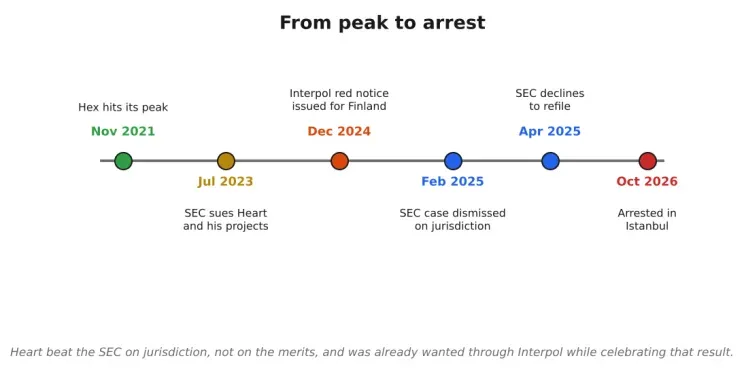
Figure 2. The timeline, from peak to arrest. Hex topped out in November 2021, the SEC sued in 2023 and lost on jurisdiction in 2025, Finland’s red notice went out in December 2024, and the arrest came in October 2026. Source: Author timeline based on SEC, court, and news reporting
The chain whose only real customer was its founder
Set the legal drama aside and look at what Heart was supposedly building. The pitch was that PulseChain would be a faster, cheaper blockchain with Heart as the visionary leading it. The sacrifice phase kicked off in 2021, and after a long run of delays the network went live in May 2023. Under the hood it was a fork of Ethereum, meaning it copied Ethereum’s balances and tokens onto a brand new chain, which in theory gave it an enormous head start.
In practice the head start went nowhere. PLS has no listings on any major exchange, so most people in crypto cannot buy it on the platforms they actually use. On the chain itself, the economy revolves mostly around PulseX, the exchange Heart also built and also funded through its own sacrifice. The biggest source of activity on PulseChain is therefore another Heart project. It is a chain whose biggest customer is its founder’s other tokens, like opening a shopping center where the only tenants are shops the landlord owns. The lights are on and the car park is empty.
How the market took it
The market reacted about as you would expect. On the day the arrest news broke, PLS fell roughly 40% in 24 hours, and Hex and PLSX were dragged down in the same sell off. For context, Hex was already down more than 99% from its peak before any of this, and the wider ecosystem had been sitting near the bottom for a long time. This was a drop from almost nothing to slightly less than nothing, not a crash from the top of a bull run, with the market treating a founder’s arrest as the network losing its only remaining reason to exist.
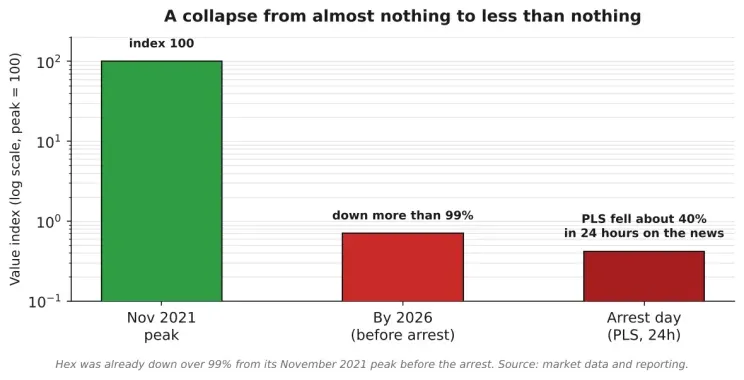
Figure 3. Hex was already down more than 99% from its November 2021 peak long before the arrest, and PLS fell roughly 40% in 24 hours on the news. The founder’s legal trouble hit a token that had almost nothing left to lose. Source: Author chart based on market data and reporting
What happens next, and what a red notice is not
It helps to be precise about where this stands, because the legal machinery is slower and less certain than the headlines suggest. An Interpol red notice is not an international arrest warrant. It is a request to law enforcement worldwide to locate and provisionally detain someone pending extradition, and each country decides for itself how to act on it. Turkey acted, detained Heart, his wife, and 3 men described as bodyguards, and searched 15 properties. As of the Justice Minister’s statement, judicial proceedings for the suspects and examination of the seized materials were ongoing, and no extradition filing or court ruling had been publicly confirmed.
What comes next is a Turkish legal process to decide whether Heart is handed to Finland, which can take months and which he can contest. If he is extradited, he faces the Finnish tax investigation, where the question is domestic and jurisdiction will not be the escape hatch it was with the SEC. The Finnish matters remain allegations under investigation, and nothing has been decided.
The pattern this fits
Heart’s story is unusual in its details and ordinary in its shape. The crypto industry has a recurring structure where a single charismatic founder becomes the entire investment thesis, the token rises on belief in that person, and the whole thing unwinds when the person is removed, by a market turn, a regulator, or a courtroom. The endings differ, which is the part worth paying attention to.
SafeMoon reached roughly an $8 billion market value in 2021 on exactly this kind of momentum. Its chief executive, Braden John Karony, was convicted in May 2025 of securities fraud, wire fraud, and money laundering, and in February 2026 a federal judge sentenced him to 8 years and 4 months and ordered him to forfeit $7.5 million. BitConnect, one of the earliest and largest of these, was an alleged $2.4 billion Ponzi scheme whose founder, Satish Kumbhani, was indicted in the US in 2022 and then vanished, still at large. Set against those, Heart’s position is its own case, he has not been convicted of anything, the SEC case died on jurisdiction, and the Finnish matter is an open investigation. The pattern is not proof of what he did. It is a reason the warning signs were legible to anyone who had seen the shape before, a project whose product was a person, a token with no use beyond belief, and a founder whose wealth was the pitch.
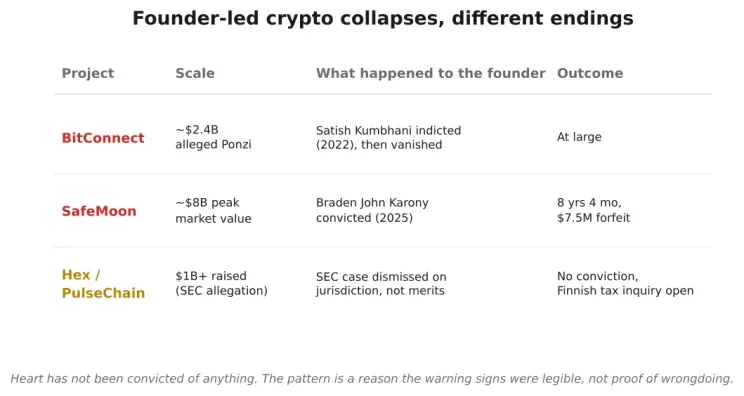
Figure 4. Heart’s case against 2 other founder-led crypto collapses. The endings differ, SafeMoon’s CEO was convicted and jailed, BitConnect’s founder was indicted and vanished, and Heart has not been convicted, with the SEC case dismissed on jurisdiction and the Finnish matter still an investigation. Source: Author chart based on court records and reporting
What it leaves behind
As things stand, Heart is in Turkish custody and the question of extradition to Finland is for the Turkish courts to decide. It began with a man on a live stream selling confidence, which became more than $1 billion in sacrifices and an ecosystem that promised to change everything. When the single biggest selling point of a project is the person behind it, the project has one structural flaw that never goes away, remove the person and there is nothing left standing. Heart has now been removed from the picture, and the tokens tied to him are reacting accordingly, while the serious questions, the Finnish tax investigation above all, move to a courtroom where geography will not save him.
Sources
- Hex founder Richard Heart arrested in Istanbul, CoinDeskcoindesk.com. Accessed 23 October 2026.
- Turkey confirms Richard Heart’s arrest, seized $7.15 million and six cold wallets, The Blocktheblock.co. Accessed 23 October 2026.
- SEC charges Hex founder Richard Heart, SEC press releasesec.gov. Accessed 23 October 2026.
- Richard Heart’s SEC case dismissed in full, Decryptdecrypt.co. Accessed 23 October 2026.
- Richard Heart arrested in Turkey almost 2 years after Interpol red notice, Protosprotos.com. Accessed 23 October 2026.
- SafeMoon CEO sentenced to 8 years for crypto fraud, Decryptdecrypt.co. Accessed 23 October 2026.
- BitConnect founder indicted for alleged $2.4 billion Ponzi scheme, The Blocktheblock.co. Accessed 23 October 2026.
- Turkey’s Justice Minister confirms Richard Heart’s Istanbul arrest, Bitcoin.comnews.bitcoin.com. Accessed 23 October 2026.
Related stories
Crypto & markets
Asia Is Not Opening Crypto to Everyone. It Is Handing It to the Banks.
The headlines from Asia right now read like a crypto bull case coming to life. Japan reclassified over a hundred digital assets under securities law. Hong Kong issued its first stablecoin licences.
Security
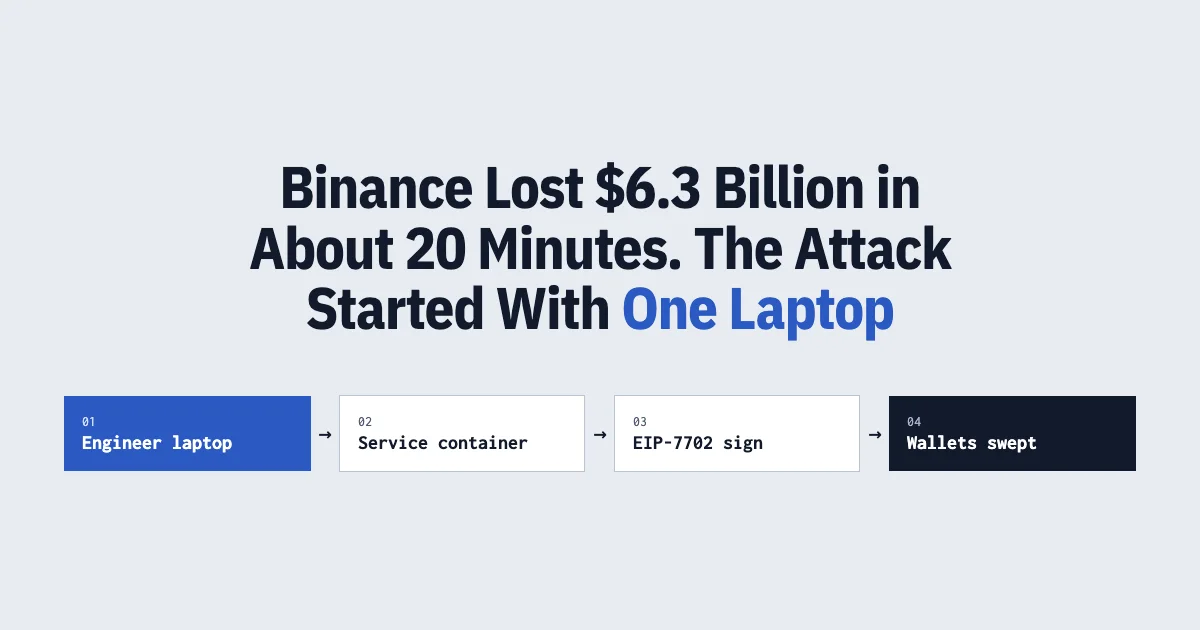
Binance Lost $6.3 Billion in About 20 Minutes. The Attack Started With One Laptop
On 29 October 2026 attackers drained roughly $6.3 billion from Binance hot wallets in about 20 minutes, 4 times the size of the previous record. The way in was a compromised engineer’s laptop, and the clever part was a new Ethereum feature called EIP-7702 that let them turn a hot wallet into an automatic sweeper. I went through how it happened, how much got frozen, and why this did not break crypto the way it would have a few years ago.
Crypto & markets
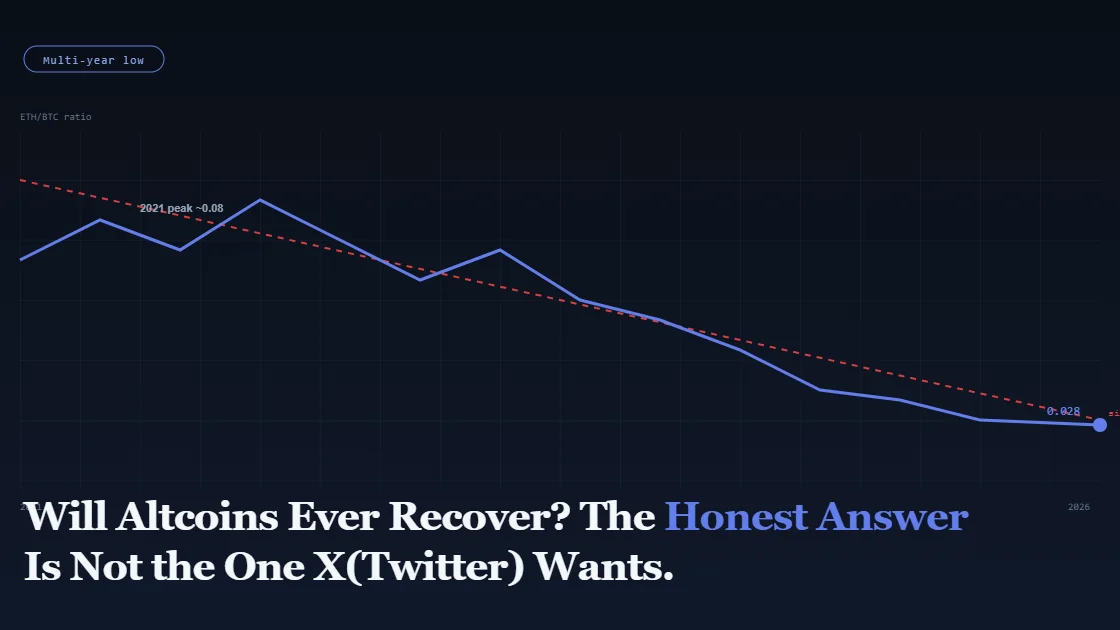
Will Altcoins Ever Recover? The Honest Answer Is Not the One X(Twitter) Wants.
Note: This article is for informational purposes only and does not constitute financial or investment advice.