Crypto Was Built to Cut Out the Banks. The Banks Just Cut Back In.
There is a version of this story where the banks came around. Where the suits finally did their research, got over their scepticism, and concluded that blockchain technology was worth taking seriously. That is the version the press releases describe.
Last verified Also on Medium

On this page
- What Banks Are Actually Afraid Of
- The Product They Built to Solve Their Problem
- The Custody Play Most People Are Missing
- BNY Mellon
- Standard Chartered
- Morgan Stanley
- When Banks Build Their Own Stablecoins
- The Legislation That Handed Banks a Structural Advantage
- The Fight That Is Happening Right Now
- The Bigger Question Underneath All of This
There is a version of this story where the banks came around. Where the suits finally did their research, got over their scepticism, and concluded that blockchain technology was worth taking seriously. That is the version the press releases describe.
The more accurate version is less flattering. The banks did not change their minds. They changed their strategy. Crypto kept growing despite every prediction that it would collapse, regulators eventually started writing rules around it, and institutional money began moving in. At that point, sitting on the sidelines stopped being a principled stance. It started being a competitive disadvantage.
What followed is one of the more remarkable pivots in modern financial history. JP Morgan’s blockchain division has now processed over $3 trillion in cumulative transaction volume. The same bank whose CEO spent years calling Bitcoin worthless is today running a live token on Coinbase’s network, filing money market funds onto public Ethereum, and targeting $10 billion in daily blockchain transactions. The technology did not change. The threat assessment did.
What Banks Are Actually Afraid Of
To understand why the pivot happened when it did, you need to understand the specific economic fear driving it.
Stablecoins like USDC and USDT sit outside the banking system. They are issued by private companies, backed by reserves held independently, and when someone moves money into one, that money leaves the bank. Not gradually. Immediately. McKinsey calculated that for every $1,000 shifted into a stablecoin, banks lose roughly $850 in funding.

That is a structural threat to the core business.
Banks do not hold your deposits. They lend them out. A deposit is the raw material the lending machine runs on. The entire model of fractional reserve banking depends on deposits staying put. Stablecoins are the first consumer-grade financial product in decades that makes it genuinely easy for ordinary people to hold significant money entirely outside the banking system.
Citigroup’s 2025 digital money report estimated that even a 5% point shift in consumer deposits toward stablecoins would represent hundreds of billions leaving the traditional banking system over a five year period. The numbers are still relatively small today. The trajectory is not.
This is the context for everything the banks have done since. It is not enthusiasm for decentralisation. It is a calculated response to an existential funding risk.
The Product They Built to Solve Their Problem
The bank industry’s answer to stablecoins is the tokenized deposit, and the design choice at its centre tells you everything about the intent behind it.
JP Morgan’s tokenized deposit product went live on Coinbase’s Base network in November 2025. It uses real blockchain infrastructure. Transactions settle on-chain. The technology is genuine. What is different is that the product is structured as a direct liability of JP Morgan itself. Your digital dollar is a claim on a dollar sitting inside the bank. It is FDIC eligible, it is interest bearing, and it never leaves the institution’s balance sheet.
A stablecoin moves your money outside the banking system. A tokenized deposit keeps it inside while giving the transaction experience of a stablecoin. The blockchain is real. The freedom from the bank is not.
The distinction matters because the two products lead to completely different financial futures. One expands where your money can go and who controls it. The other digitises the existing relationship while leaving the power structure exactly where it was.
The Custody Play Most People Are Missing
Alongside the product competition over digital dollars, a quieter and arguably more consequential land grab is happening in crypto custody.
Custody is the business of holding assets on behalf of others and keeping them secure. In traditional finance it is unglamorous infrastructure. In crypto it is the chokepoint through which institutional capital flows, and whoever controls it controls the on-ramps and off-ramps for every major institution entering the space.
BNY Mellon
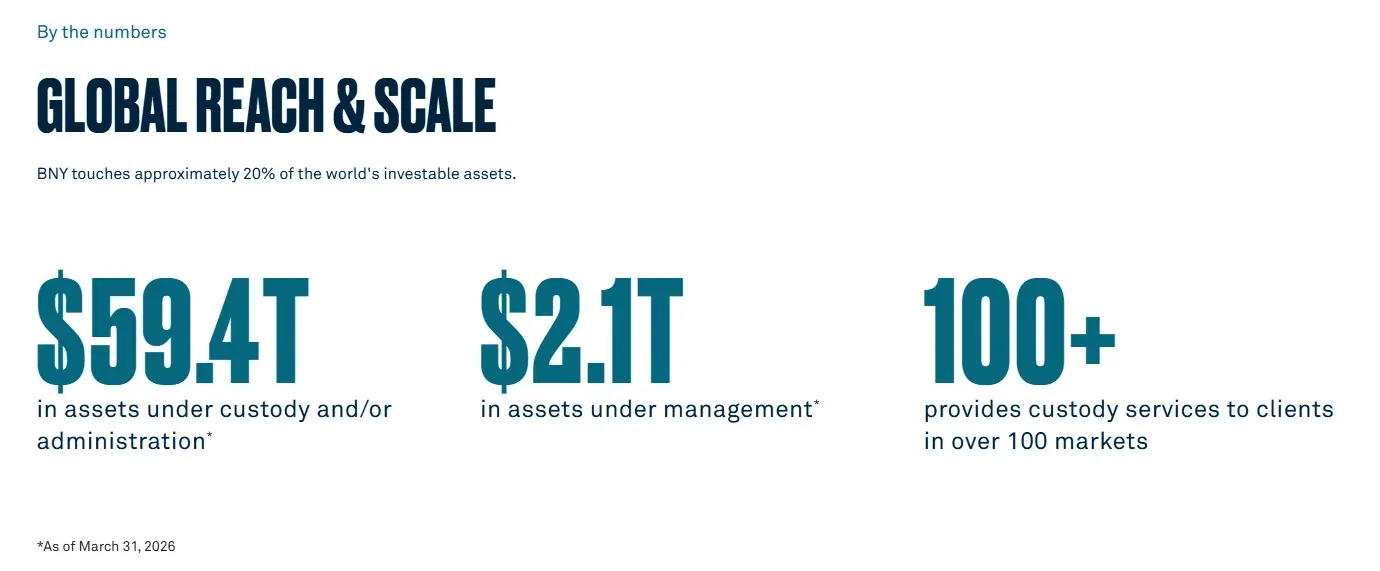
BNY Mellon holds $59.4 trillion in assets under custody as of early 2026. That figure exceeds the combined annual GDP of the United States, China, and Germany. In May 2026, the bank launched institutional crypto custody services in Abu Dhabi, beginning with Bitcoin and Ethereum. The oldest continuously operating bank in the United States is now formally in the business of holding crypto assets for institutional clients.
Standard Chartered
Standard Chartered had been running a crypto custody venture called Zodia at arm’s length since 2020. In May 2026, they ended the experiment and acquired the business outright, folding it directly into the bank’s core operations. Nine days later, they completed the first institutional crypto custody transaction by a globally systemically important bank in Hong Kong. In a market where regulatory precedent matters enormously, being first to execute in a major jurisdiction is not a minor distinction.
Morgan Stanley
Morgan Stanley filed for a national trust charter in early 2026, which would allow them to bring crypto custody, staking, and trading entirely in-house. They simultaneously launched crypto trading on E-Trade at 50 basis points, cheaper than Charles Schwab at 75 and Fidelity at around 100. Their Bitcoin ETF launched at a 0.14% expense ratio, the lowest in the market at the time. This is a firm pricing for scale from day one, not testing the water.
The pattern across all three is identical. Arm’s length experiments become full acquisitions. Third party relationships become in-house operations. Tentative pilots become infrastructure. The banks are not dabbling. They are consolidating.
When Banks Build Their Own Stablecoins
Some institutions decided that competing with stablecoins was less efficient than issuing their own.
SoFi became the first US chartered bank to offer a stablecoin inside a consumer banking app in May 2026, making SoFi USD available to roughly 14.7 million account holders directly alongside their checking and savings accounts. The product is integrated with Mastercard’s payment network for settlement. This is not a crypto product for crypto users. It is digital currency embedded into mainstream retail banking.
Fidelity launched its own stablecoin in February 2026, with reserves custodied at BNY Mellon. In Europe, 37 banks across 15 countries are jointly developing a euro stablecoin called Quivira, backed by institutions including ING, BNP Paribas, BBVA, and UniCredit. S&P Global projects the euro stablecoin market could reach €1.1 trillion by 2030, from a base today that represents less than 2% of global stablecoin supply.
The consortium model in Europe is deliberate. No single institution can take on USDC or USDT alone. But 37 banks moving as a coordinated bloc, entering a market before any crypto-native firm has established dominance in euro-denominated stablecoins, is a different calculation. The consortium is not just a product strategy. It is a market entry barrier built collectively before the market is large enough to attract serious competition.
The Legislation That Handed Banks a Structural Advantage
In July 2025, the United States passed its first federal stablecoin framework. The GENIUS Act introduced full reserve requirements and brought regulatory clarity to an industry that had been operating in legal ambiguity for years. On its face, it is consumer protection legislation.
One provision inside the bill is worth examining closely. The GENIUS Act prohibits stablecoin issuers from paying yield to holders. Stablecoins can now exist legally in the United States, but they cannot pay you interest. This is significant because the competitive advantage a stablecoin issuer could theoretically offer was exactly that: earning a return on your digital dollars without keeping them inside a bank. The banking lobby had previously estimated that allowing stablecoin yield could trigger $6.6 trillion in deposit outflows. The yield ban removes that threat precisely.
The legislation does what good legislation often does in financial markets. It appears neutral while resolving a competitive question in favour of the incumbent. Stablecoins are legitimised. The feature that would have made them genuinely threatening is banned.
The Fight That Is Happening Right Now
The CLARITY Act, which passed the Senate Banking Committee 15 to 9 in May 2026, contains the provision the GENIUS Act excluded: a pathway for crypto firms to pay deposit-like returns on stablecoins. It is the one legislative development that would change the competitive calculus the banks spent years engineering.
The response from the banking industry was immediate. The American Bankers Association coordinated an emergency communication to bank CEOs and members sent over 8,000 letters to Senate offices in the days following the committee vote. The volume of the response is itself informative. This is not routine lobbying. This is an industry treating a piece of legislation as an existential threat.
The most revealing comment came from Jamie Dimon on Fox Business in late May 2026. He said that if the CLARITY Act allows crypto firms to pay interest on digital dollars, banks will not accept it. He described the prospect as something that would eventually blow up. He criticised Coinbase’s lobbying efforts in unusually personal terms.
The contradiction in that position is worth naming directly. JP Morgan is today running a deposit token on Coinbase’s network and filing financial products onto Ethereum. The bank’s CEO is simultaneously lobbying to ensure that Coinbase cannot pay users interest on a competing digital dollar product. The bank is using the competitor’s infrastructure while fighting to limit the competitor’s ability to compete.
Senator Bernie Moreno, a Republican, characterised the banking lobby as a cartel defending a monopoly that pays consumers next to nothing. That description, from a senator whose party typically aligns with financial industry interests, indicates that the political coalition protecting the status quo is under genuine pressure.
The Bigger Question Underneath All of This
Digital money is going to exist. That question is settled. The question still being fought over is what kind of digital money it will be, who controls it, and what you can actually do with it.
The original architecture of stablecoins and public blockchains was designed around a specific set of principles: no gatekeepers, no permission required, no institution deciding who is allowed in. Money that anyone with a phone can hold, send, and earn returns on. A Bank of England senior official predicted in 2026 that tokenized deposits will displace stablecoins and that within five years we may wonder why stablecoins were ever considered significant. That prediction could be correct. What it describes is a world where digital money exists everywhere, but the gatekeepers remain exactly the same ones who ran the previous system.
The banks are not opposed to digital money. They are opposed to digital money that they do not control. Every move described in this piece, the tokenized deposits, the custody acquisitions, the bank-issued stablecoins, the lobbying against yield, follows the same logic. Take the technology. Remove the autonomy it was designed to provide. Rebuild the familiar system with a faster interface.
Whether that outcome is inevitable depends partly on the regulatory fight happening right now, and partly on whether the institutions building open alternatives can move fast enough to establish genuine scale before the legislative environment forecloses the space.
The banks spent years dismissing crypto. Now they are building on it, competing with it, lobbying against it, and buying the infrastructure that underlies it. All at the same time. That level of simultaneous engagement is not confusion. It is the behaviour of an industry that has identified the threat clearly and is pursuing every available response in parallel.
The interesting question is not whether the banks are serious about crypto. They clearly are. The interesting question is whether the version of crypto that survives their serious attention will still be recognisable as the thing that was supposed to challenge them.
Sources
No sources have been filed for this piece yet.
Related stories
Crypto & markets
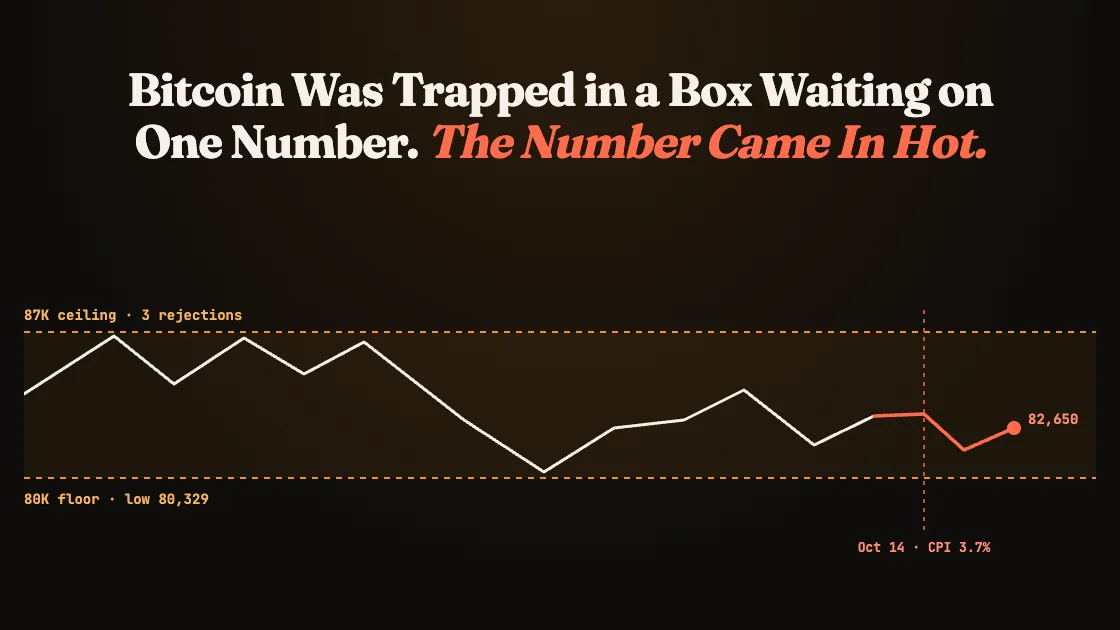
Bitcoin Was Trapped in a Box Waiting on One Number. The Number Came In Hot
A ceiling near 87K, a floor near 80K, and $800 million of liquidations in between. Then the September CPI ran hot, yields jumped, and Bitcoin slid under 82K. Here is how the range was built and how it broke. None of this is financial advice. Prices and levels in this piece are as of October 14, 2026. Bitcoin and bond yields move daily.

Crypto & markets
Richard Heart Beat the SEC on a Technicality, Then His Own Tax Office Caught Up With Him in…
On 14 October 2026, Turkish police arrested the founder of Hex and PulseChain on an Interpol red notice issued for Finland, which suspects him of gross tax evasion. He had walked away from a $1 billion SEC case 18 months earlier, not because a court cleared him, but because the judge found no US jurisdiction. I went through the whole arc, the sacrifice mechanism, the allegations, the dismissal that was not an acquittal, and a blockchain whose biggest customer was its own founder.

Crypto & markets
Wall Street Filed an Automatic Bitcoin Buyer. It Runs on Stock Dividends.
On June 18, 2026, Franklin Templeton, a $1.5 trillion asset manager founded in 1947, filed registration statements with the SEC for 2 exchange-traded funds built around one of the oldest and most boring ideas in finance. A dividend reinvestment plan. The twist is where the dividends go.