They Left Ethereum. They Built Their Own Chains. A Decade Later, Here Is the Scoreboard
Ethereum started with 8 co-founders crammed into a house in Switzerland. Most of them did not stay. Charles Hoskinson walked and built Cardano. Gavin Wood walked and built Polkadot.
Last verified Also on Medium
On this page
- The Boardroom That Split Three Ways
- The Numbers Are Brutal
- Where the Value Actually Sits: Developers and DeFi
- The Broader Pattern: A Decade of Building Your Own Chain
- The Case for Leaving Was Not Wrong
- Competition Forced Ethereum to Get Better
- They Built Things Ethereum Would Not
- They Got Full Control
- The Lesson the Numbers Are Actually Teaching
Ethereum started with 8 co-founders crammed into a house in Switzerland. Most of them did not stay. Charles Hoskinson walked and built Cardano. Gavin Wood walked and built Polkadot. Both men were absolutely certain that Ethereum was broken, too slow, too centralised, too compromised by the people running it, and both were equally certain they could do it better.
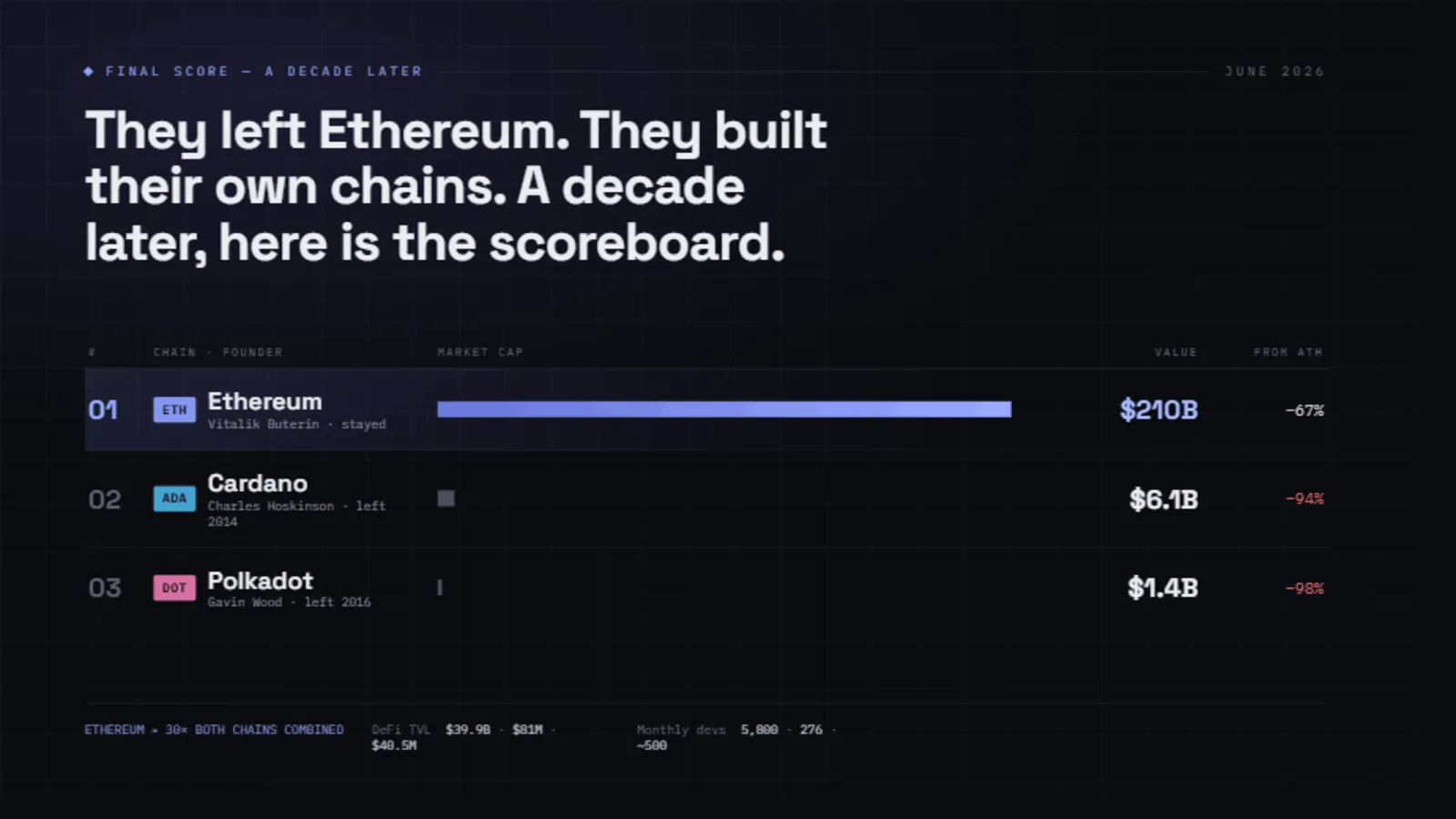
A decade later, Ethereum is worth more than 30x Cardano and Polkadot combined on market cap. That looks like a clean sweep on the scoreboard. But the question worth asking is more interesting than the number. Would either of them have been better off staying? , in June 2026, with the Ethereum Foundation cutting 20% of its own staff and slashing 40% of its budget, that question is no longer historical. It is playing out live.
The Boardroom That Split Three Ways
The fault line appeared in June 2014 in Zug, Switzerland. Hoskinson, who had been acting as CEO, wanted Ethereum built as a proper company. Venture capital, professional management, commercial operations, the full Silicon Valley playbook. Vitalik Buterin wanted the opposite, a nonprofit foundation, neutral, open-source, a public good that nobody owned. Vitalik later said the pressure to go corporate made him feel, in his own words, a little dirty.
The remaining co-founders voted with Vitalik. Hoskinson was out. His conviction about Ethereum’s prospects at that moment was visible in what he did next: he donated all 293,000 of his ETH to his secretary and walked away to build Cardano around the exact opposite philosophy to what he had just lost the vote over. Peer-reviewed academic research, formal verification, mathematical proofs that the code does what it claims.
Gavin Wood’s departure two years later was different in character. Wood was not a money argument. He was arguably the most technically essential person in the room after Vitalik himself. He wrote the Ethereum Yellow Paper, the formal specification that turned Vitalik’s whitepaper into an actual machine. He invented Solidity, the programming language that still dominates smart contract development globally. He coined the phrase Web3. He left around 2016 because he believed Ethereum’s architecture was a dead end, describing the early network as more like a technology demo than a system capable of supporting millions of users. Rather than patching it with layers built on top, he decided to rebuild the whole thing from scratch as specialised chains sharing security. That became Polkadot.
Two of Ethereum’s most important builders had walked out of the front door and bet they could build something better than what they helped invent. The obvious question is whether that bet paid off.
The Numbers Are Brutal
Ethereum’s market cap sits at approximately $210 to $215 billion as of early July 2026, with ETH trading around $1,750 to $1,800 per the most recent CoinDesk and Coinbase price data. Cardano’s market cap sits at around $6.1 billion according to DeFiLlama. Polkadot’s sits at approximately $1.4 billion. Ethereum is roughly 30x larger than Cardano and more than 100x larger than Polkadot. But market cap is a snapshot taken at a moment of price. The drawdown story is more instructive about what holding these assets has actually felt like.
Ethereum is down approximately 67% from its all-time high of around $4,954, which it reached in August 2025. That is genuinely painful for anyone who bought near the peak. Cardano is down close to 94% from its all-time high. Polkadot is down approximately 98%. According to MEXC’s data, if you bought either breakaway chain near its 2021 peak, you have lost almost everything you put in on a dollar basis.
The ICO return comparison tells a different story about the founding generation specifically, though it is worth noting this measures something most investors could not actually access. Ethereum’s ICO sold ETH at approximately 30 cents in 2014. At today’s price, even in a bear market, that is roughly a 5,000x return. Cardano’s ICO priced ADA at around 2 cents in 2017. From that entry, ADA is up approximately 7x, which is not nothing, but it has been grinding near those levels for extended periods. Polkadot launched at around $2.90 after its 2020 redomination. It is currently trading at less than $1, meaning holders who bought at launch are underwater in dollar terms. The chain Gavin Wood built to fix Ethereum’s flaws has been the worst price performer of the 3.
Where the Value Actually Sits: Developers and DeFi
Price tells you what the market thinks. Developer activity and total value locked tell you where real economic activity is happening. On both metrics, the gap between Ethereum and the breakaway chains is not a gap. It is a canyon.
Ethereum has approximately 5,800 active monthly developers according to Electric Capital data. Polkadot maintains around 450 to 500 monthly active developers as of 2025 data. Cardano has approximately 276 full-time developers. The EVM ecosystem as a whole, Ethereum plus its layer-2 networks plus every compatible chain, accounts for Solidity making up around 70% of all smart contract activity globally.
The total value locked comparison is the single most damning number in this entire comparison. TVL measures the money sitting inside a chain’s DeFi applications. Ethereum holds approximately $39.9 billion in TVL according to CoinGecko’s live chain data. Cardano holds approximately $81 million in TVL according to DeFiLlama. Polkadot’s on-chain TVL sits at approximately $40.5 million. Ethereum’s DeFi economy is roughly 300 times larger than both breakaway chains combined. The chains built to capture the same use case as Ethereum have together captured less than 0.3% of what Ethereum holds.
Inside Polkadot’s own ecosystem, the signal has become harder to ignore. Key projects have abandoned ship entirely. Centrifuge migrated to Ethereum. Manta shut down its parachain. The ATA project pivoted to becoming an Ethereum layer tool. In other words, builders inside Gavin Wood’s own ecosystem looked at the scoreboard and walked back toward the thing he left. Polkadot ranked sixth globally in 30-day core developer activity as of April 2026, a respectable position in absolute terms, but the on-chain usage metrics tell a different story.
The Broader Pattern: A Decade of Building Your Own Chain
The Hoskinson and Wood exits did not just produce Cardano and Polkadot. They established a template that the entire industry ran for the next decade. Ethereum is broken. Our consensus mechanism is better. Our token will capture the value our chain creates. Then go raise VC money, launch a token, bootstrap a validator set, and go hunting for the same pool of smart contract developers.
EOS, Tron, Tezos, Solana, Avalanche, Sui. All of it. Wave after wave of brilliant developers taking the same bet. , for the ecosystem as a whole, it was a colossal misallocation of some of the smartest people in the industry. The capital and talent that went into building competing L1s could have compounded inside a single ecosystem instead.
CoinGecko estimates that over 53% of all tokens ever listed are now dead, with 11.6 million failed projects in 2025 alone making up 86% of all failures since 2021. That is the actual body count of the build-your-own-chain era.
The talent drain that followed this era is now compounding into something more serious. Weekly crypto code commits collapsed roughly 75% between early 2025 and early 2026, falling from approximately 850,000 to around 210,000. Active developers across the whole industry fell 56%, dropping to roughly 4,600 people. The destination for most of that talent was not another chain. It was AI. In 2025, AI captured approximately $211 billion in funding against crypto’s $19.7 billion. That is better than a 10:1 ratio. GitHub added 36 million developers in 2025 as crypto’s commit activity cratered.
The bleed has now reached the very top. On June 23, 2026, the Ethereum Foundation announced 54 layoffs, roughly 20% of its approximately 270-person workforce, alongside a 40% cut to its 2026 operating budget. 9 senior figures have left since January, including both co-executive directors. The Defiant reported that insiders warned of a $20 to $30 million structural funding gap affecting core development teams. The chain that won the market cap competition is facing the same developer retention problem as the chains that lost it.
The Case for Leaving Was Not Wrong
Before writing off the breakaway thesis entirely, it is worth being honest about what the departures actually produced. The scoreboard says Ethereum won. The full picture is more complicated.
Competition Forced Ethereum to Get Better
The Merge, Ethereum’s switch from proof of work to proof of stake, had been theorised since 2014 and endlessly delayed. It cut Ethereum’s energy consumption by approximately 99.95% and eliminated what had been its single biggest barrier to institutional adoption. What finally lit the fire under it? External pressure from energy-efficient chains, including Cardano, which actually shipped proof of stake before Ethereum did. When Solana started processing around 1,300 transactions per second against Ethereum’s roughly 26 on mainnet, Ethereum had no choice but to respond. EIP-4844, which slashed layer-2 costs in 2024, was a direct answer to that competitive heat. Without the breakaway chains and the rivals they inspired, Ethereum almost certainly moved slower.
They Built Things Ethereum Would Not
Gavin Wood pioneered shared security through parachains, letting a new chain rent the safety of an entire validator set from day one rather than bootstrapping its own. He built Substrate, a toolkit used to spin up blockchains far beyond Polkadot’s own ecosystem. He coined the term Web3, a contribution that shaped how the entire industry described itself for a decade. He is now building JAM, an attempt to turn the Polkadot network into a decentralised supercomputer. None of those things would have happened if he had stayed inside Ethereum’s governance structure.
Hoskinson’s case is equally real on the technology side. Cardano was built on formal verification, mathematical proof that the code does what it claims, a genuine alternative to the move-fast-and-break-things culture that produced hack after hack in Ethereum’s DeFi ecosystem. While Ethereum chased DeFi speculation, Cardano deployed a blockchain identity system that issued credentials to approximately 5 million students in Ethiopia. Real-world financial inclusion in emerging markets, use cases that Ethereum’s culture deprioritised for years.
They Got Full Control
Both men got complete control of their own roadmaps. No foundation approval process, no committee grinding every decision to dust. Hoskinson could fund formal verification research for years because he controlled the treasury. Wood could build whatever architecture he believed in without needing consensus from a foundation that had just voted him out.
The irony that ties it together is this. They were right about the problems. They were wrong, or unlucky, about whether their solutions would capture more value than Ethereum’s own evolution.
The Lesson the Numbers Are Actually Teaching
Crypto ultimately rewards network effects and liquidity over technical purity. The developer who builds a slightly better mousetrap loses to the one who builds where all the mice already are. Ethereum’s first-mover advantage in tooling, liquidity, and applications compounded into a moat that better engineering could not cross. Both Hoskinson and Wood built genuinely novel technology that pushed the whole industry forward, and both got crushed on the only scoreboard that pays out.
The cruelest proof of this lesson is happening inside Ethereum right now. As the Foundation cuts staff, 5 former Ethereum Foundation senior researchers have just launched ETHLabs, an independent nonprofit backed by more than $11 billion in ETH holdings from BitMine, SharpLink, and co-founder Joseph Lubin, tasked with solving the engineering problems that keep banks and institutions from settling on Ethereum at scale. That is exactly what Hoskinson and Wood did a decade ago. The only difference is that these people are staying tied to Ethereum instead of building a rival. They learned the lesson. Do not fight the network. Build on it.
The build-your-own-chain decade produced real technology, genuine innovation, and a level of competitive pressure that forced Ethereum to evolve faster than it would have on its own. It also produced a 75% collapse in developer commits, 11.6 million dead tokens, and 2 chains that together hold less than 0.3% of Ethereum’s TVL a decade later.
The question that the next generation of builders is now facing is the same one Hoskinson and Wood faced in 2014 and 2016. Build an experiment or build a network. Both are valid choices. They are not the same bet. The last decade showed you which one pays.
Sources
- CoinDesk: Ethereum Foundation Cuts 20% of Staff Amid Leadership Exodus, June 23, 2026 –54 positions eliminated, 9 senior departures since January, months-long restructuring tied to updated mandate.coindesk.com. Accessed 7 July 2026.
- Unchained: Ethereum Foundation Cuts 20% of Staff and 40% of Budget in Sweeping Reset, June 24, 2026 –54 layoffs, 40% budget reduction, reorganisation into 5 work clusters.unchainedcrypto.com. Accessed 7 July 2026.
- Thirdweb: Ethereum Foundation Restructuring, 40% Budget Cut, and ETHLabs Launch, June 23, 2026 — ETHLabs launched by 5 former EF researchers, backed by $11B+ in ETH. Full restructuring analysis.blog.thirdweb.com. Accessed 7 July 2026.
- The Defiant: Ethereum Foundation Cuts 20% Staff, June 2026 — $20 to $30 million funding gap warning from insider. Co-executive director departures documented.thedefiant.io. Accessed 7 July 2026.
- Yahoo Finance / Ethereum News: EF Drops 20% of Staff and Reshapes Into Five Clusters — 38-page mandate document, treasury policy from June 2025, target spend rate reduced from 15% to 5% by 2030.finance.yahoo.com. Accessed 7 July 2026.
- CoinGecko: Blockchain TVL Rankings — Ethereum TVL at $39.9B. All-chain combined TVL $73.7B.coingecko.com. Accessed 7 July 2026.
- DeFiLlama: Cardano Chain Metrics — Cardano TVL at $81.1M. Market cap at $6.1B. $13.6M annual fees.defillama.com. Accessed 7 July 2026.
- MEXC: Is Polkadot Dead? A 2026 Data-Driven Look, April 2026 — Polkadot TVL at $40.5M, 450 to 500 monthly active developers, sixth globally in 30-day core dev activity.mexc.com. Accessed 7 July 2026.
- Messari: Cardano vs Ethereum Comparison — Cardano approximately 276 full-time developers. Market cap comparison as of April 2026.messari.io. Accessed 7 July 2026.
- Bitget Academy: Is Polkadot (DOT) Dead in 2026? — Polkadot 450 to 500 monthly active developers. TVL $1.2B in early 2026 across ecosystem. 98% drawdown from ATH.bitget.com. Accessed 7 July 2026.
- MEXC: Ethereum vs Cardano vs Polkadot vs Solana Comparison — ETH opened July 2026 near $1,571. Ethereum processing 30+ TPS with smart contract capabilities.mexc.com. Accessed 7 July 2026.
- EIP-4844: Proto-Danksharding Specification — Layer-2 cost reduction via blob transactions, launched 2024 in response to competitive pressure on fees.eips.ethereum.org. Accessed 7 July 2026.
Related stories

Crypto & markets
Richard Heart Beat the SEC on a Technicality, Then His Own Tax Office Caught Up With Him in…
On 14 October 2026, Turkish police arrested the founder of Hex and PulseChain on an Interpol red notice issued for Finland, which suspects him of gross tax evasion. He had walked away from a $1 billion SEC case 18 months earlier, not because a court cleared him, but because the judge found no US jurisdiction. I went through the whole arc, the sacrifice mechanism, the allegations, the dismissal that was not an acquittal, and a blockchain whose biggest customer was its own founder.
Crypto & markets
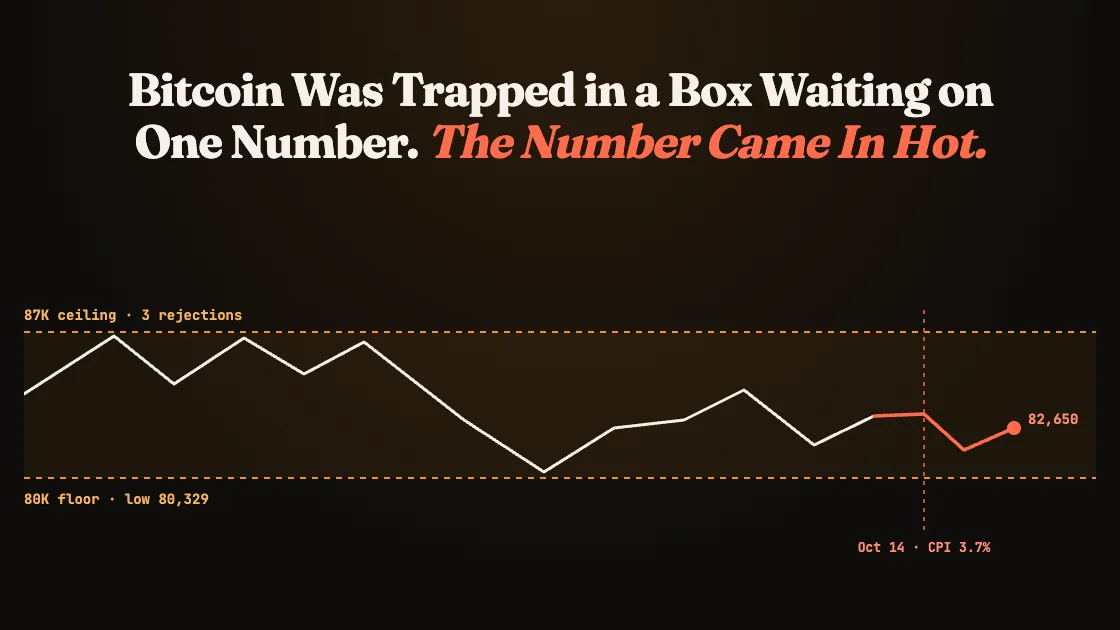
Bitcoin Was Trapped in a Box Waiting on One Number. The Number Came In Hot
A ceiling near 87K, a floor near 80K, and $800 million of liquidations in between. Then the September CPI ran hot, yields jumped, and Bitcoin slid under 82K. Here is how the range was built and how it broke. None of this is financial advice. Prices and levels in this piece are as of October 14, 2026. Bitcoin and bond yields move daily.
Crypto & markets
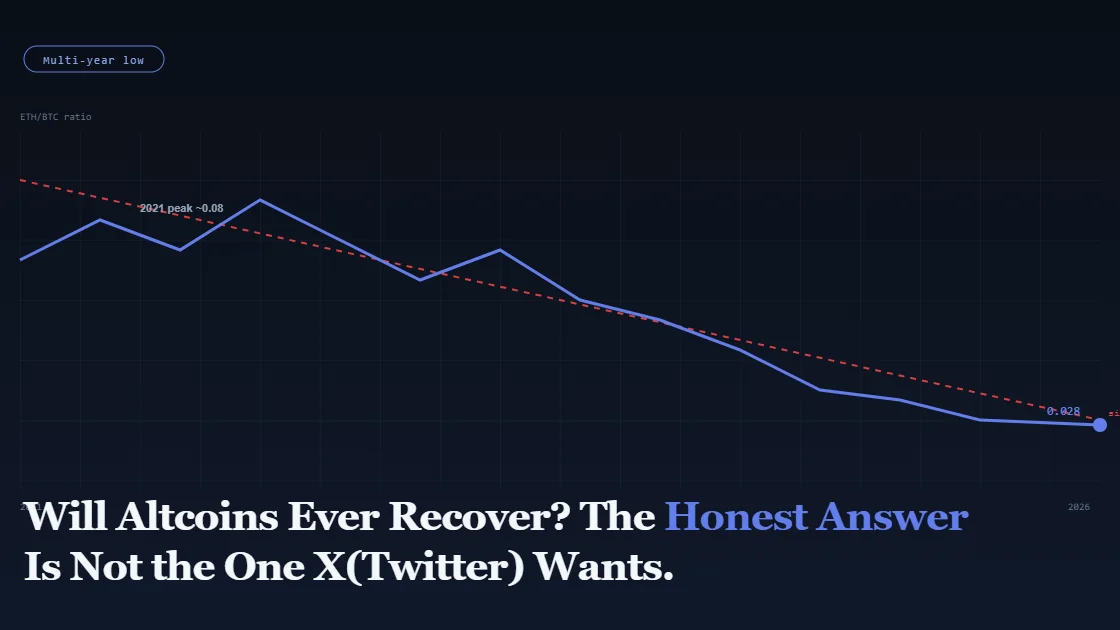
Will Altcoins Ever Recover? The Honest Answer Is Not the One X(Twitter) Wants.
Note: This article is for informational purposes only and does not constitute financial or investment advice.